
Brazil’s Import Market for Manufactured Goods: Size & Growth
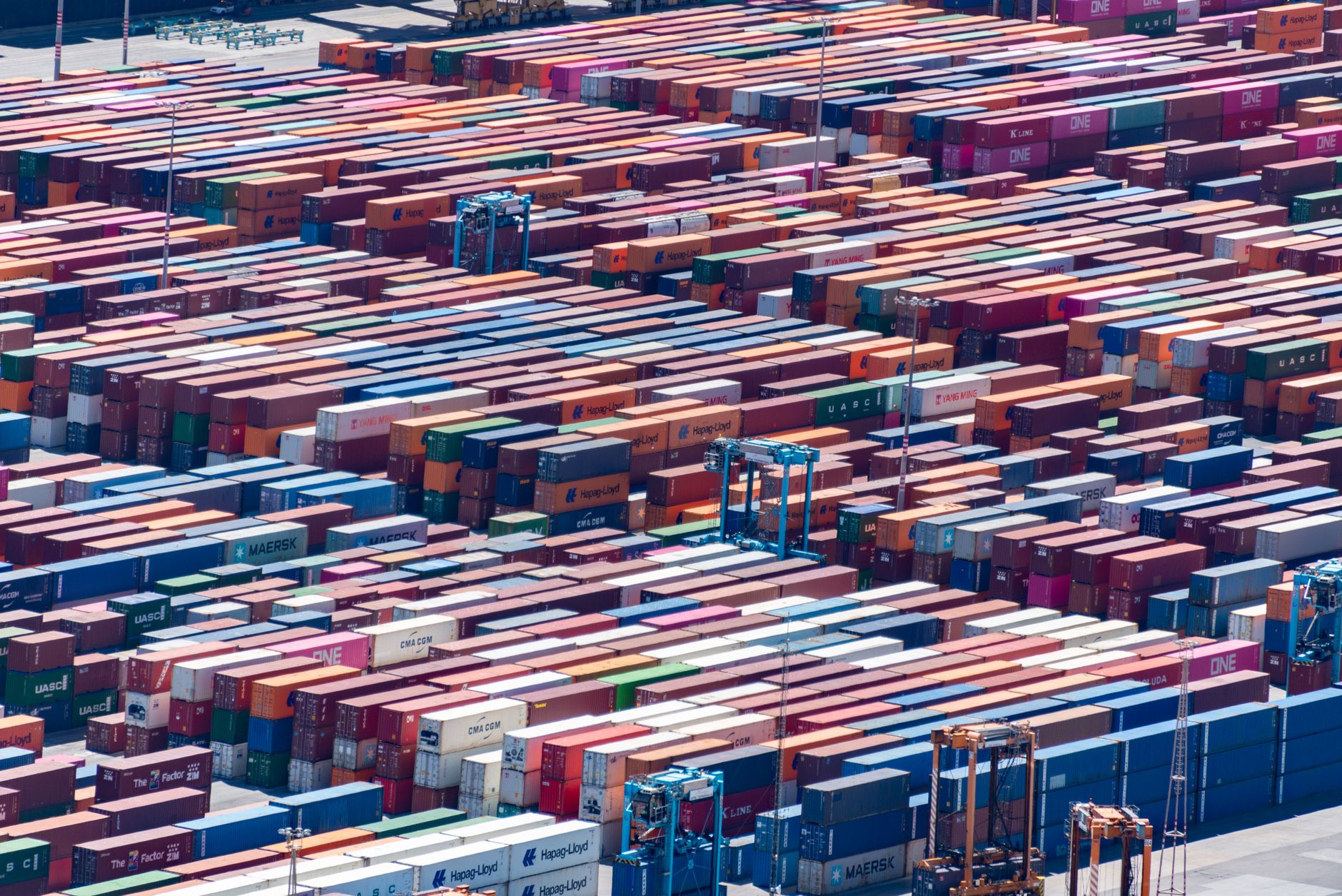
Brazil is Latin America’s largest economy and one of the world’s largest industrial markets, and it is also a market whose own manufacturing base cannot cover domestic demand for many categories of machinery, components, technology, and finished manufactured goods, which is why imports fill the gap.
- Brazil is a G20 economy and a founding member of Mercosur, with an industrial base that has historically depended on imports for a wide range of machinery, components, and finished manufactured goods.
- Demand growth is driven by structural, qualitative factors: a rising middle class, expanding industrial and infrastructure investment, and an agribusiness sector that relies heavily on imported capital equipment.
- Market size alone does not tell a US exporter whether a deal will close. Import licensing, taxation, and product certification determine whether interest actually converts into a shipped order.
- The most reliable way to size your specific opportunity is to look at trade flow data for your product’s HS code, not a generic macro statistic about “Brazil” as a whole.
The big picture: a large, industrializing economy that cannot supply itself
Brazil is consistently described among the largest economies in the world and is by a wide margin the largest economy in Latin America. It has a large, urbanizing, consumption-driven population, a diversified industrial base spanning agribusiness, automotive, energy, construction, and consumer goods, and a domestic manufacturing sector that, in several capital-intensive and technology-intensive categories, has never fully closed the gap between what the country consumes and what it can produce at home.
That gap is not a temporary condition. Brazil has historically been one of the largest importers of capital goods and industrial inputs in Latin America, a position tied to the scale of its economy and to decades of industrial policy that protected certain sectors while leaving others structurally reliant on foreign machinery, components, and technology. For a US exporter, the practical takeaway is simple: this is not a small, marginal market to test opportunistically. It is a market large enough, and structurally open enough in the right categories, to justify a serious, well-prepared entry into the Brazilian market.
Why does Brazilian industry depend on imports?
The honest answer is that Brazil’s domestic supply chain is uneven. In some sectors, most notably parts of agribusiness processing and certain segments of automotive and heavy industry, local manufacturing is mature and competitive. In many others, including precision machinery, advanced electronics components, specialized industrial equipment, and categories tied to newer technology cycles, domestic production is thin or nonexistent, and Brazilian buyers have no realistic alternative to sourcing internationally.
This unevenness is structural rather than accidental. Brazil built strong industrial capacity in the sectors tied to its historical comparative advantages, agriculture, mining, and the industries that grew up around them, while other categories of manufactured goods simply never developed a comparable domestic base. A US exporter selling into one of those underdeveloped categories is not competing against Brazilian manufacturers so much as competing against other foreign suppliers, most often from Europe or China, who are already filling that same gap.
Stalled deals
Send us the buyer who never came back.
They liked the product, asked for a quotation, then went quiet. It is almost never the price: it is whether they can legally and predictably receive the goods.
No cost, no commitment.
What is actually driving demand growth?
A few structural trends explain why demand for imported manufactured goods keeps expanding rather than shrinking, even as parts of the domestic industrial base develop. Brazil has a growing middle class with rising purchasing power, and rising consumption tends to pull in imported finished goods and, further upstream, the machinery and components needed to manufacture and distribute those goods locally.
Infrastructure and industrial investment cycles add a second layer of demand. Roads, ports, energy generation, logistics capacity, and manufacturing plants all require capital equipment, and Brazil’s own capital goods sector does not produce everything that these projects need, particularly at the more specialized or technologically advanced end of the spectrum. Agribusiness is a third driver worth naming on its own: Brazil is one of the world’s largest agricultural producers, and that sector depends heavily on imported machinery, precision equipment, and inputs to keep expanding its output.
None of this means every category is growing at the same pace, or that growth is guaranteed for any given product. It means the underlying structural conditions, population, consumption, investment, and an agribusiness sector that keeps scaling up, point toward sustained rather than one-off demand for imported manufactured goods in the categories where domestic supply cannot keep up.
Does market size actually predict a closed export deal?
No, and this is the part most market-size pitches leave out. A large, growing market tells you that demand probably exists somewhere in Brazil for a product like yours. It does not tell you whether a specific Brazilian buyer can legally and predictably receive your goods, and that second question is what actually determines whether a quotation turns into a shipped order.
Three layers of complexity sit between “Brazil is a big market” and “we closed the deal.” The first is import licensing: a Brazilian company needs an active federal authorization to import goods at all, and that authorization can lapse or be capped at a lower volume than the deal you are proposing. The second is taxation: Brazil’s import tax structure layers several federal and state taxes, and a buyer who cannot model the full landed cost of your product is often unwilling, or unable, to commit to a price. The third is certification: many categories of manufactured goods require product-specific regulatory compliance, under bodies such as INMETRO, ANATEL, or ANVISA depending on the product, before they can legally be sold in Brazil at all.
None of this makes Brazil a bad market. It makes raw market size an incomplete signal on its own, one that has to be paired with an honest read of whether the specific opportunity in front of you is actually executable.
How should a US exporter size the real opportunity?
At Guelcos, we size US-Brazil opportunities from product-level trade data, not headline GDP numbers, because that is what actually tells you whether a deal will convert.
Instead of relying on a generic statement about how large Brazil is as an economy, size the opportunity at the level of your actual product. Start with your product’s HS code and look at which countries are already exporting that specific code into Brazil, and at roughly what volume. A category where multiple countries are already shipping meaningful volumes into Brazil tells you far more about real, converting demand than any country-level ranking does, because it shows the demand is not just theoretical, it is already being served by someone.
From there, check the tariff and tax treatment that applies to your specific HS code, since import duty and tax burden vary by product category and can materially change whether your price is competitive once it lands in Brazil. Check whether your product category is subject to certification requirements, since a product that cannot legally be sold in Brazil without INMETRO, ANATEL, or ANVISA approval needs that step built into your timeline from the start, not discovered after a buyer has already gone quiet on you.
Treat the macro size of Brazil’s market as a first filter, a reason to take the country seriously enough to do the product-level homework, not as a green light to assume any interested buyer can simply place an order. The exporters who convert Brazilian interest into repeat business are the ones who pair a real product-market fit with execution readiness on licensing, tax modeling, and certification, before they need it, not after a deal has already stalled.
Message us on WhatsAppFrequently Asked Questions
Where can I find real trade-flow data for my product’s HS code?
Brazil publishes official foreign trade statistics through its Comex Stat portal, which lets you look up import volumes by HS code and by country of origin. That product-level data is a far more useful starting point than any general statement about Brazil’s market size, and a trade partner on the ground can help you read it correctly.
Is Brazil a bigger export market than Mexico for my product?
We are not going to give you a ranking we cannot verify, and a generic country comparison would not help you anyway. The comparison that matters is how much of your specific product, by HS code, each market is already importing, and from whom. Pull that data for your product before assuming either market is the bigger opportunity.
Does market size matter if my buyer can’t get licensed to import?
Not in practice. A large addressable market is meaningless for a specific deal if the buyer in front of you is not currently authorized to import, or is capped at a lower volume than you are proposing. Market size tells you demand may exist somewhere; it does not tell you this buyer can receive this shipment.
How do I know if my product needs certification before it can be sold in Brazil?
It depends on the product category. Several classes of goods, including electronics, telecommunications equipment, and health-related products, require approval from bodies such as INMETRO, ANATEL, or ANVISA before they can legally be sold in Brazil. Check the requirement for your specific product early, since certification timelines can be long.
Leave a Reply