
Why American Manufacturers Are Looking at Brazil in 2026
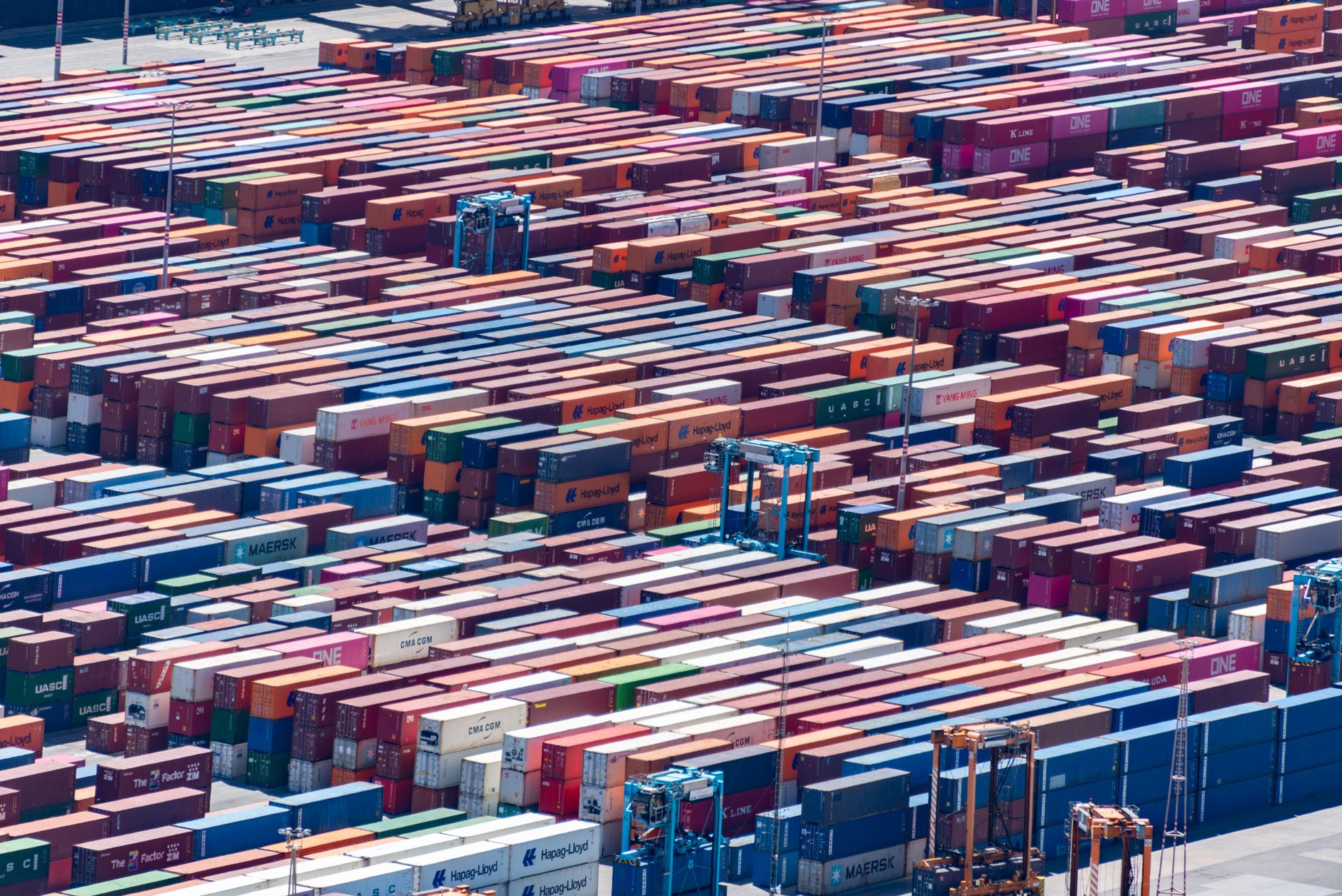
American manufacturers are looking harder at Brazil in 2026 because tariff volatility and trade tension with China are forcing a broader rethink of where a company sells, not just where it buys, and Brazil is a large, underserved industrial market that keeps surfacing in that conversation.
- Tariff and trade policy volatility is pushing US manufacturers to diversify beyond a handful of familiar export markets, not only their supply chains.
- Reshoring and nearshoring conversations tend to trigger a second, quieter question inside manufacturing companies: where else could we be selling.
- Brazil is Latin America’s largest economy and industrial base, with real demand for machinery, components and consumer goods that domestic industry does not fully cover.
- The opportunity is real, but Brazil’s import system (licensing, product certification, a layered tax structure) is genuinely harder to navigate than most first-time exporters expect.
The push behind the pivot
For most of the last decade, a US manufacturer’s export strategy could stay fairly static: a handful of established markets, long-standing distributor relationships, and China absorbing a meaningful share of attention on the sourcing side. That stability has been harder to hold onto. Tariff changes and trade tension between the United States and China have made single-market dependence, on the buying side and the selling side, look riskier than it did a few years ago, and that has pushed procurement and export teams alike to ask where else the business could be sourcing from or selling to.
The reshoring and nearshoring conversation that has dominated US manufacturing strategy is mostly framed around supply chains: where to make things, where to source components, how to shorten a logistics chain that proved fragile. But companies going through that exercise rarely stop at sourcing. Once a manufacturer is already reassessing its global footprint, it tends to ask the same question about revenue. If the supply side of the business is diversifying away from overreliance on one country, the demand side often gets the same scrutiny, and that is when markets like Brazil start showing up in strategy conversations where they previously did not.
Why is Brazil specifically on the list?
Brazil is not a new market. It has been an option on export strategy slides for years. What has changed is the context around it. As US manufacturers look for markets that are large enough to matter, industrially developed enough to absorb machinery and components, and not already saturated with the same three or four competitors chasing the same accounts, Brazil keeps coming up as one of the more credible answers. It is Latin America’s largest economy and its largest industrial base, with sectors (agriculture equipment, energy, construction, consumer manufacturing) that consistently need inputs domestic producers cannot fully supply on their own.
That combination, real scale plus real unmet demand, is unusual. Many of the markets that come up in the same conversation are either too small to justify the effort of entering them, or so competitive that a new entrant has little room to win share. Brazil sits in a different spot: big enough to be worth the effort, open enough that a well-positioned manufacturer can still find room, and, importantly, still underserved by direct-from-US relationships compared to how thoroughly it is served by European and Asian suppliers.
Stalled deals
Send us the buyer who never came back.
They liked the product, asked for a quotation, then went quiet. It is almost never the price: it is whether they can legally and predictably receive the goods.
No cost, no commitment.
The gap between demand and domestic supply
Brazilian industry is large, but it does not produce everything the domestic economy needs, and it never has. Certain categories of machinery, specialized components, and manufactured goods are either not made in Brazil at competitive quality and cost, or are not made in the volumes local buyers require. That gap is what creates room for a foreign manufacturer, and it is also what makes the opportunity easy to overstate if you look only at macro numbers without asking who is actually buying and why.
Brazilian buyers in these categories are not naive about their options. Many already import from Europe or from Asia, and a good number have tried, at some point, to bring in goods from the United States and found the process harder than expected, not because the product was wrong but because the transaction stalled somewhere between quotation and delivery. That history matters for how a US manufacturer should read the opportunity: the demand is genuinely there, but converting interest into a signed, repeatable export relationship is a different exercise than identifying that the demand exists in the first place.
The part that does not make it into the pitch deck
Every macro argument for entering Brazil eventually runs into the same wall: the country’s import system was not built to make life easy for a new foreign supplier, and most of the friction is invisible from the outside until a deal is already in motion. A Brazilian company cannot simply place an order and receive goods the way a buyer in most other markets can. It needs an active import license, granted and tracked through the federal Siscomex system (commonly referred to by the RADAR designation), and that license has tiers and activity requirements that are easy for a foreign supplier to be completely unaware of.
Certification adds another layer. Depending on the product category, Brazilian regulators (INMETRO for a wide range of industrial and consumer goods, ANVISA for health-related products, ANATEL for telecom equipment) require specific approvals before goods can legally be sold in the country, and those approvals are not fast or informal. On top of licensing and certification sits Brazil’s tax system, which layers federal and state-level charges in a way that has no direct equivalent in the US and that most first-time exporters, and often their US-side finance teams, underestimate when they first model the deal.
None of this means Brazil is a bad market. It means the market rewards manufacturers who treat Brazil market entry as an operational project, not just a sales target. This series goes deeper into each of these pieces individually, RADAR licensing, certification requirements, and landed cost, because each one deserves more than a paragraph. The point here is simply to name them early, so the opportunity described above is read with open eyes rather than as a straight line from interest to revenue.
“The demand is real. What stalls most US manufacturers is not finding the buyer, it is what happens between the quote and the shipment.”
Guelcos, from client conversations with US manufacturers entering Brazil
What actually turns opportunity into a shipment
Guelcos has operated on the trade side of Brazil since 2006, and the pattern we see most often with US manufacturers is not a lack of interested buyers. It is a deal that gets partway there (a quotation, a promising conversation, sometimes even a purchase order) and then stalls, because nobody on the US side of the table has visibility into whether the buyer is licensed, whether the product needs certification, or what the landed cost actually adds up to once Brazilian taxes are applied correctly. That is not a sales problem. It is an execution gap, and it sits specifically on the Brazil side of the deal, which is exactly the side a US manufacturer has the least visibility into.
Think of it as needing a Brazil-based extension of your own team, the kind of full import management support that can look at a specific buyer and a specific product and tell you, concretely, what stands between where the deal is today and a container actually clearing customs. That is a narrower, more practical question than “is Brazil a good market,” and it is the one that actually determines whether 2026 is the year a manufacturer starts shipping to Brazil or the year it adds Brazil to a slide and moves on.
Opportunity without execution capability does not produce revenue. It produces a pipeline of promising conversations that quietly go nowhere, which is a familiar pattern for manufacturers who have looked at Brazil before and backed away without ever finding out why the deal actually stalled. The rest of this series works through the specific blockers (import licensing, certification, landed cost, and the operational mechanics of getting goods from a US port to a Brazilian buyer) one at a time, so a manufacturer evaluating Brazil in 2026 can tell the difference between a market that is hard and a market that is simply unfamiliar. See the full range of what Guelcos does for exporters entering Brazil.
Message us on WhatsAppFrequently Asked Questions
Is Brazil a realistic export market for a mid-size US manufacturer, or only for large companies?
Mid-size manufacturers export to Brazil successfully, but the process rewards preparation more than size. What matters is whether someone on the deal has visibility into the buyer’s import status and the product’s certification needs before you invest heavily in the relationship, not the size of your company.
Do I need a Brazilian entity or a local office to sell into Brazil?
Not necessarily. Many US manufacturers export to Brazil without setting up a local entity, working instead through the Brazilian buyer’s own import license or a specialized trade partner. Whether a local entity ever makes sense depends on volume and how the relationship evolves, which is worth discussing case by case.
How is working with a Brazil-based trade partner different from just selling through a distributor?
A distributor typically buys and resells, absorbing risk but also margin and control. A trade partner on the Brazil side works alongside your existing sales relationships, diagnosing and resolving the specific blockers (licensing, certification, cost, logistics) that keep a deal you have already found from actually closing.
How long does it realistically take to close a first deal in Brazil?
It depends heavily on the buyer’s own readiness (license status, prior import history, product certification needs) and we would rather not attach a generic timeframe without knowing those specifics. It is rarely instant, but it is also rarely as slow as manufacturers assume once the real blockers are identified early.
Is this mostly about tariffs, or is there a deeper structural reason to look at Brazil now?
Tariff volatility is the trigger for many of these conversations, but the underlying reason is more durable: Brazil has real, ongoing demand in categories domestic industry cannot fully supply. Tariffs made manufacturers look up from familiar markets; what they find in Brazil is not new, it was simply not on the list before.
Leave a Reply