
Brazil as an Export Market for European Industry: 2026 Outlook
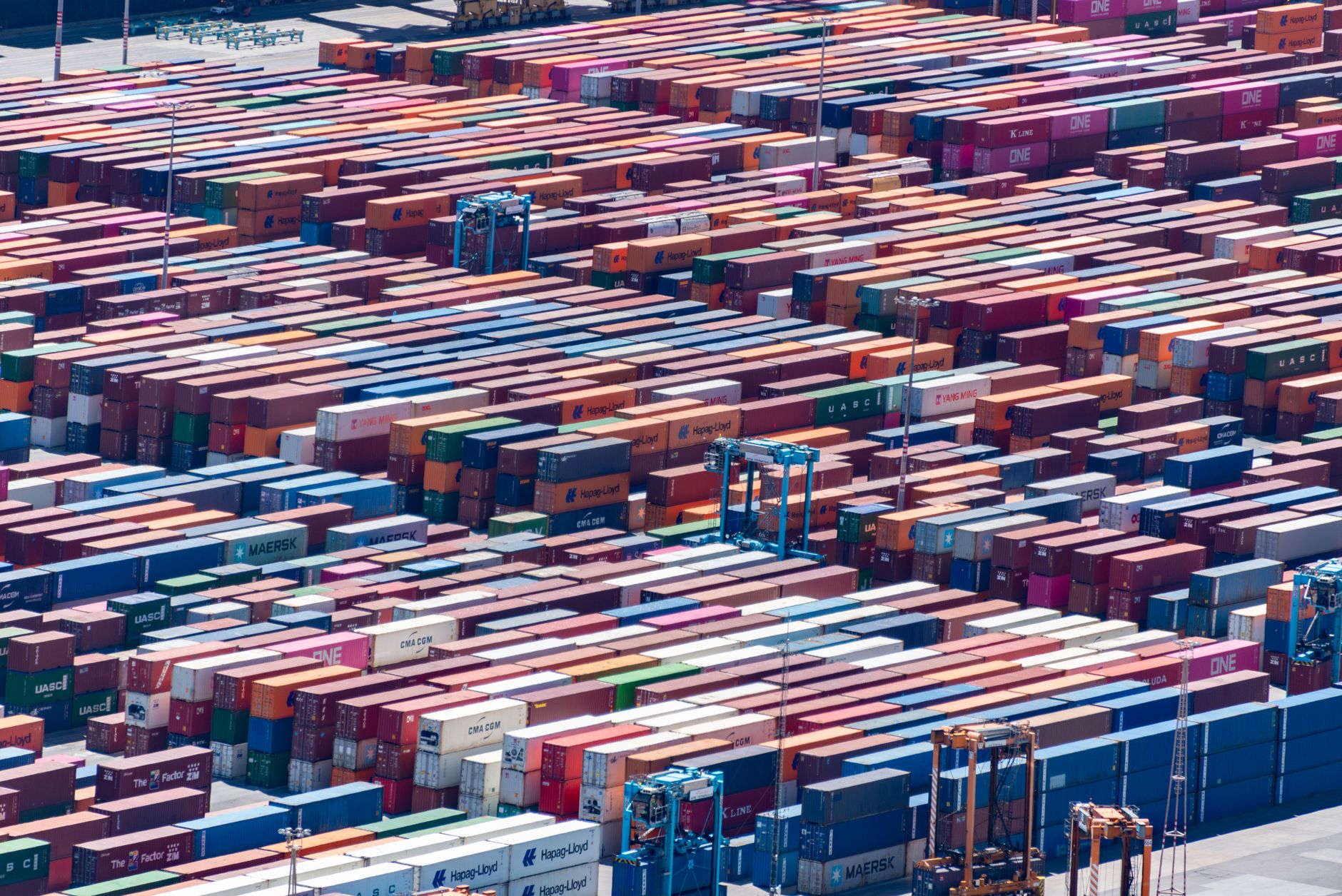
Brazil remains one of the largest industrial and consumer markets outside Europe still under-served by direct European exports, and 2026 is shaping up as a pivotal year because of the pending EU-Mercosur ratification, a domestic tax reform underway in Brazil, and steady demand for machinery, components and specialised goods that Brazilian industry does not produce locally at scale.
- Brazil is Latin America’s largest economy and a persistent net importer of industrial machinery, precision components and specialised inputs that European manufacturers are well positioned to supply.
- Two structural shifts are converging in 2026: the pending EU-Mercosur agreement and Brazil’s ongoing consumption tax reform, both of which affect the cost and complexity of importing.
- Market demand and market access are different problems. Demand can be strong while a specific Brazilian buyer is still unable to complete the import legally.
What is driving demand for European goods in Brazil
Brazilian industry continues to depend on imported capital goods, industrial components, and specialised inputs across sectors such as agribusiness equipment, medical devices, industrial automation, packaging machinery and specialty chemicals. Domestic manufacturing capacity in many of these categories has not kept pace with demand, and Brazilian buyers routinely look to Europe for the combination of engineering quality and regulatory rigour that competing suppliers from other regions do not always match.
Currency swings and interest rate cycles affect the timing of purchases, but the underlying structural gap, Brazil buying more sophisticated industrial goods than it manufactures, has held for years and is not something a single macro cycle reverses.
Two policy shifts reshaping the entry calculus
The first is the EU-Mercosur association agreement, which is working through ratification and will progressively reduce tariffs on a large share of industrial trade between the EU and Brazil once fully implemented. The second, often overlooked by exporters outside Brazil, is the country’s own consumption tax reform, which is restructuring how PIS, COFINS, ICMS and other indirect taxes are calculated over a multi-year transition. Both shifts change the landed cost equation for a Brazilian importer, and both are still mid-transition in 2026, which means the numbers a buyer worked with last year may already be out of date.
| Factor | Status in 2026 | Effect on European exporters |
|---|---|---|
| EU-Mercosur tariffs | Ratification in progress, phase-in pending | Future duty relief, not yet fully applied |
| Brazil tax reform (IBS/CBS) | Multi-year transition underway | Landed cost models need updating as rules change |
| Import licensing (Radar) | Unchanged, buyer-side requirement | Still the most common point of failure |
Stalled deals
Send us the buyer who never came back.
They liked the product, asked for a quotation, then went quiet. It is almost never the price: it is whether they can legally and predictably receive the goods.
No cost, no commitment.
Where European exporters have the clearest opening
Machinery and industrial equipment, precision components, medical and laboratory devices, specialty chemicals and premium consumer goods tend to see the strongest and most consistent Brazilian demand for European suppliers, largely because these categories combine technical requirements Brazilian manufacturing has not scaled and a buyer base willing to pay for reliability. Within any of these categories, though, the size of the opportunity has less to do with how much Brazil wants the product and more to do with how many buyers in that sector are actually equipped to import it.
Why demand does not automatically convert into orders
A strong market outlook is not the same as a pipeline of closeable deals. The recurring pattern European manufacturers report is a Brazilian buyer who is genuinely interested, requests a detailed quotation, and then the conversation slows or stops. In most cases that is not a change of heart about the product. It reflects that importing into Brazil requires the buyer to hold an active federal import licence, understand a landed cost that includes several layered taxes, and in many product categories clear a certification process, and not every interested buyer has done that homework before they reach out.
What should European manufacturers do before 2026 ends?
The practical priority for the rest of 2026 is not to forecast exactly when the EU-Mercosur agreement finishes ratification, since that calendar is outside any single company’s control, but to make sure the parts of the deal a manufacturer does control are ready. That starts with reviewing any Brazilian contacts already in the pipeline, including ones that went quiet months or years ago, and checking whether the reason they stalled was a genuine loss of interest or one of the recurring blockers on the buyer’s side: import licensing, landed cost uncertainty, unresolved trust, or a certification requirement nobody flagged early enough.
It also means building a landed cost conversation into the sales process earlier than most exporters currently do. Waiting until a buyer asks about total cost, rather than proactively addressing it once serious interest is established, gives hesitation more time to set in. The manufacturers who report the fastest-moving Brazilian pipelines tend to be the ones who treat the buyer’s import readiness as part of the sales conversation, not a separate problem the buyer is left to solve alone after the quotation is sent.
Finally, it is worth building a relationship with a Brazil-based partner before there is an urgent deal that needs one. Diagnosing a buyer’s licensing status, modelling a landed cost accurately, or arranging third-party verification all take some lead time, and a manufacturer that only reaches out once a deal is already at risk of collapsing has less room to work with than one that has the relationship in place beforehand.
Guelcos runs this exact diagnostic for European manufacturers today: checking a Brazilian buyer’s licensing status, building an accurate landed cost model, and arranging independent verification before a deal is at risk of stalling.
Message us on WhatsAppFrequently Asked Questions
Is Brazil a good market for a mid-size European manufacturer, not just large multinationals?
Yes. Import volumes into Brazil are not dominated only by large multinational suppliers. Mid-size manufacturers with a specialised or technically differentiated product regularly find Brazilian buyers, especially in sectors where domestic production is limited.
How much will the EU-Mercosur agreement actually lower my costs?
It depends on your product’s tariff classification and the phase-in schedule once ratification is complete, which was still in progress as of 2026. We would rather flag that uncertainty than quote a number we cannot stand behind.
Does Brazil’s tax reform make importing simpler?
Over the long term it is designed to simplify the indirect tax system, but the transition itself runs over several years, and landed cost models need to be checked against current rules rather than assumptions from a prior year.
What is the single biggest reason interested Brazilian buyers do not place an order?
In our experience, it is rarely price. It is usually that the buyer cannot yet legally and predictably receive the goods, whether because of licensing, tax modelling, or certification gaps.
Leave a Reply